Quick Answer:
On page SEO basics are the techniques used to optimize individual web pages so they rank higher on search engines like Google. This includes improving content, title tags, meta descriptions, keyword placement, internal links, images, and overall page structure to help both users and search engines understand your content better.
What Is On Page SEO?
On page SEO basics refer to optimizing all the elements directly on your website to improve search engine rankings and user experience.
It includes:
- Optimizing content
- Using target keywords naturally
- Improving title tags
- Writing meta descriptions
- Creating SEO-friendly URLs
- Using proper heading tags
- Adding internal links
- Optimizing images
In simple words, on-page SEO helps search engines understand what your page is about.
When Google clearly understands your content, your chances of ranking higher increase.
This is one of the most important parts of SEO because it is fully under your control.
Unlike off-page SEO, where backlinks depend on external websites, on-page optimization can be done directly by you.
Why Are On Page SEO Basics Important for Rankings?
Understanding on page SEO basics is essential because they directly affect how search engines evaluate your website.
Here’s why they matter:
They Help Google Understand Your Content
Google scans your page to understand its topic.
It looks at:
- Headings
- Keywords
- Meta tags
- Internal links
- Content structure
If your page is properly optimized, Google can understand it faster.
They Improve User Experience
Good on-page SEO makes your content easier to read.
Users stay longer when pages are:
- Well structured
- Easy to navigate
- Fast loading
- Mobile-friendly
Google notices this behavior and often rewards better user experience.
They Increase Organic Traffic
Better optimization leads to higher rankings.
Higher rankings bring more clicks.
More clicks mean more traffic.
That’s why strong on-page SEO is the foundation of long-term growth.
What Are the Most Important On Page SEO Factors?
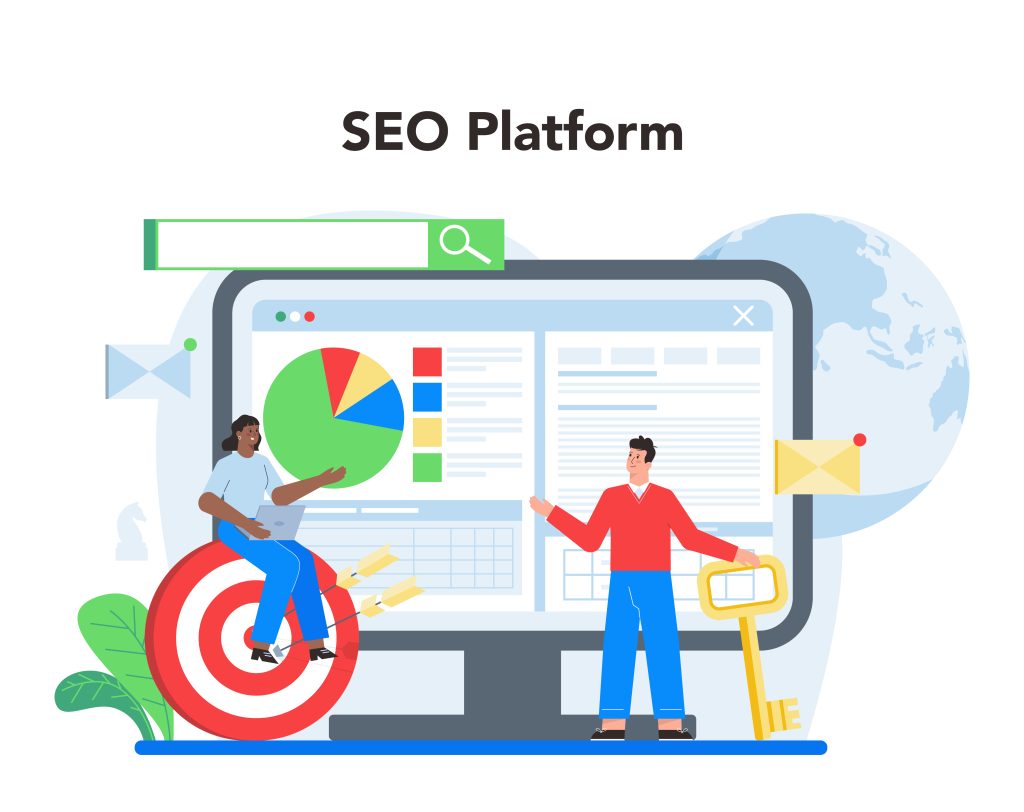
Marketer online service or platform. Advertising and promotion. Marketing strategy and communucation with a customer. Isolated flat vector illustration
There are several important factors in on page SEO for beginners.
Let’s break them down.
Content Quality and Relevance
Content is the most important ranking factor.
Your content should be:
- Helpful
- Original
- Relevant
- Easy to understand
Google wants to show users the best answer.
If your content solves their problem, rankings improve.
Keyword Placement
Using keywords naturally is critical.
Place your target keyword in:
- Title tag
- First paragraph
- H1 heading
- Subheadings
- Meta description
- Image alt text
But avoid stuffing.
Keyword stuffing harms rankings.
Title Tags and Meta Descriptions
Your title tag tells search engines what your page is about.
A strong title should:
- Include the primary keyword
- Be clear
- Encourage clicks
Meta descriptions improve CTR.
They should summarize the page clearly.
URL Structure
SEO-friendly URLs are short and descriptive.
Good example:
example.com/on-page-seo-basics
Bad example:
example.com/page?id=23984
Clean URLs improve readability and indexing.
Internal Linking
Internal links connect one page to another on your website.
Benefits:
- Improves navigation
- Distributes authority
- Helps search engines crawl pages
It also keeps users engaged longer.
How to Do On Page SEO Step by Step?
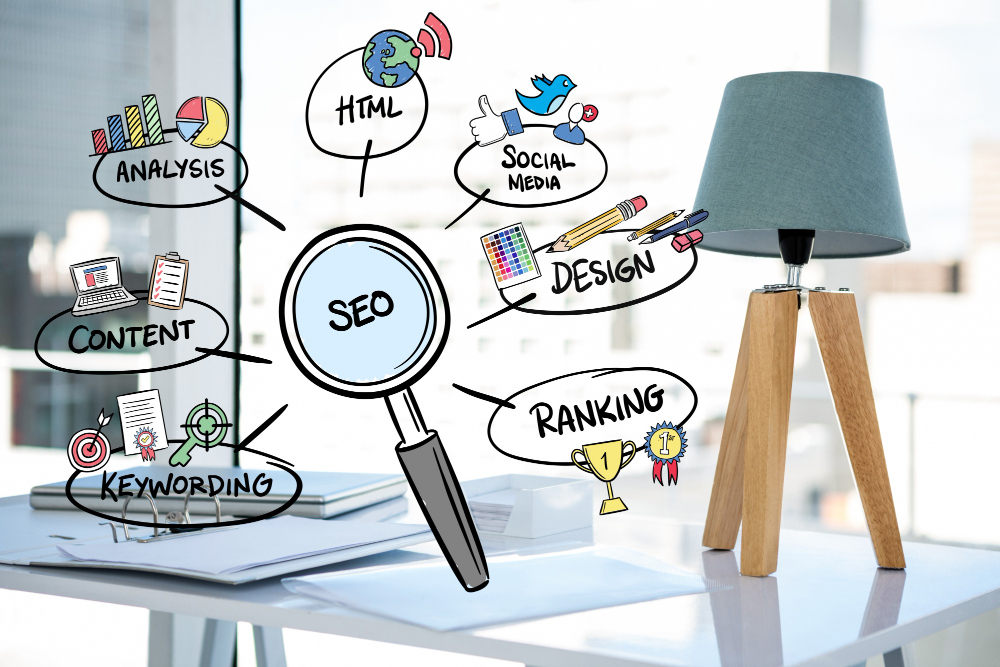
If you’re wondering how to do on page SEO, follow these steps.
Step 1: Perform Keyword Research
Start by finding what people are searching for.
Use tools like:
- Google Keyword Planner
- Ubersuggest
- Ahrefs
- SEMrush
Choose keywords with:
- Relevant search intent
- Good volume
- Low to medium competition
Step 2: Optimize Title and Meta Description
Write a title that includes your keyword.
Example:
On Page SEO Basics: Beginner’s Guide to Higher Rankings
Meta description example:
Learn on page SEO basics to improve rankings, optimize content, and increase organic traffic with simple SEO techniques.
Step 3: Use Proper Heading Structure
Your page should use:
- H1 for the main topic
- H2 for major sections
- H3 for subtopics
This improves readability and helps Google understand hierarchy.
Step 4: Optimize Your Content
Write content that answers user questions.
Use secondary keywords naturally.
Focus on clarity.
Keep paragraphs short.
Make content easy to scan.
Step 5: Add Internal Links
Link to related pages.
Example:
If your page is about on-page SEO, link to:
- Keyword research guide
- Technical SEO guide
- Image SEO article
This strengthens topical authority.
Step 6: Optimize Images
Image SEO matters.
Use:
- Descriptive file names
- Alt text
- Compressed images
Example alt text:
on page SEO checklist for beginners
What Is an On Page SEO Checklist for Beginners?
Here’s a simple on page SEO checklist:
✅ Use primary keyword in title
✅ Add keyword in first 100 words
✅ Write meta description
✅ Use one H1 tag
✅ Add H2 and H3 headings
✅ Optimize images
✅ Add internal links
✅ Improve readability
✅ Use short URLs
✅ Make page mobile-friendly
This checklist covers the core on page SEO techniques.
What Are Common On Page SEO Mistakes to Avoid?
Many beginners make avoidable mistakes.
Keyword Stuffing
Repeating keywords too much looks unnatural.
Google may penalize over-optimization.
Missing Meta Tags
Pages without title tags and meta descriptions lose ranking opportunities.
Poor Content Structure
Large text blocks reduce readability.
Break content into sections.
Ignoring Mobile Optimization
Most searches happen on mobile devices.
A poor mobile experience hurts rankings.
Broken Internal Links
Broken links frustrate users and harm crawlability.
Check them regularly.
Key Takeaway
On page SEO basics are essential for improving rankings and creating a better user experience.
If you focus on:
- Quality content
- Smart keyword placement
- Clear structure
- Internal linking
- Technical optimization
You’ll build a stronger foundation for SEO success.
Start with small improvements and keep optimizing consistently.
Frequently Asked Questions
What is the difference between on-page and off-page SEO?
On-page SEO focuses on optimizing your website content and structure.
Off-page SEO focuses on external signals like backlinks.
How long does on-page SEO take to show results?
Most websites see noticeable results within 4 to 12 weeks, depending on competition and website authority.
Is on-page SEO enough to rank on Google?
On-page SEO is essential, but combining it with off-page SEO and technical SEO gives better results.
How many keywords should I use per page?
Focus on one primary keyword and 5 to 7 related secondary keywords naturally.
What is the best on-page SEO tool?
Popular tools include:
- Yoast SEO
- Rank Math
- Ahrefs
- SEMrush
- Google Search Console
Can beginners do on-page SEO easily?
Yes.
Learning on page SEO basics is straightforward.
With practice and consistency, beginners can optimize pages effectively

Digitvora is an SEO-focused digital platform that helps businesses improve search visibility, organic traffic, and online growth. We provide expert guidance on On-Page SEO, Technical SEO, Keyword Research, AEO, and content optimization to help websites rank higher and build lasting authority in search engines and AI-driven search experiences.